





Phase change in buildings
Phase change (or phase transition) is the transition of a system from one state of matter to another by heat transfer. For example, from a solid to a liquid or from a liquid to a gas.
Phase changes can be a mechanisms for heat transfer in buildings.
When systems change phase, they absorb or release significant amounts of heat energy (latent heat, expressed in J/kg). The systems themselves do not change temperature as the energy is consumed or generated by the physical process of changing the state of the system. For example, when water evaporates, it absorbs heat, producing a cooling effect. So when water evaporates from the surface of a building, or when sweat evaporates from the skin, this has a cooling effect. Conversely, when water condenses it releases heat.
This mechanism has been used to cool buildings in hot climates by spraying water over the building fabric, however phase change is often overlooked in heat transfer and energy use calculations.
Phase change is also important in refrigeration, where refrigerant gases absorb heat from the cooling medium (typically water) as they evaporate, and release heat when they condense, which is rejected to the outside (or recovered). The exact opposite of this process is used to generate heat in heat pumps.
See refrigerants and heat pumps for more information.
A newly-emerging application of phase change in buildings is the use of phase change materials (PCM). These are generally materials with a large specific latent heat capacity. They can be used in construction to reduce internal temperature changes by storing latent heat in the solid-liquid or liquid-gas phase change of a material. Heat is absorbed and released almost isothermally and is used to reduce the energy consumed by conventional heating and cooling systems by reducing peak loads.
Phase change materials used in buildings will typically melt and solidify within a range of 18-30ºC. They are able to store up to 14 times more thermal energy per unit volume than conventional thermal storage materials.
See phase change materials for more information.
[edit] Related articles on Designing Buildings Wiki
- Advanced phase change materials.
- Advanced phase change materials industry.
- Heat transfer.
- Thermal comfort.
- Thermal mass.
- Building services.
- Conduction.
- Convection.
- Gross calorific value.
- Insulation.
- Latent heat.
- Mass transfer.
- Phase change materials.
- Refrigerants.
- Solar gain.
- Thermal optical properties.
- Thermal mass.
Featured articles
Check out some of the best features and news from Designing Buildings as well as key stories from around the web.

An extraordinary record of steel engineering worldwide.
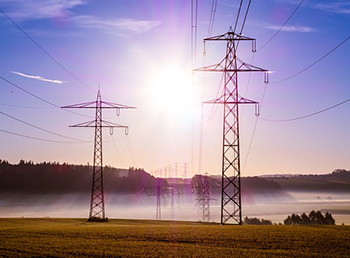
Households living near new pylons to save on bills.

ECA warns growth must not outpace grid capacity or skills.
The role of the client and decision making

CIOB response to built environment professions call for evidence.
Construction's sustainability reporting revolution
Tracking upfront embodied carbon with digital tools.
ECA welcomes procurement reforms
Public spending must back British jobs and skills.
Campaigning for Edinburgh: the Cockburn Association 1875-2049

The role of the civic voice in protecting character. Book review.

CIOB photography competition is open for entries.
ECA Edmundson apprentice of the year award
Finalists announced.
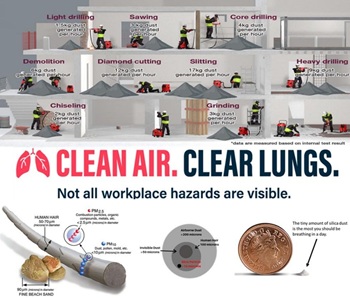
Major new study exposes serious knowledge gaps.
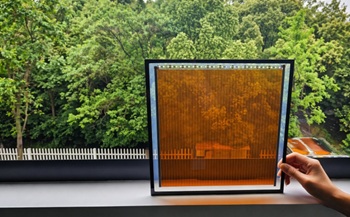
Generating energy from internal light as well as sunshine.

ECA welcomes plans to strengthen subcontractor quality control.